The Architecture of the Night Market
From Tang Dynasty regulations to the UNESCO-recognized hawker centres of modern Singapore.
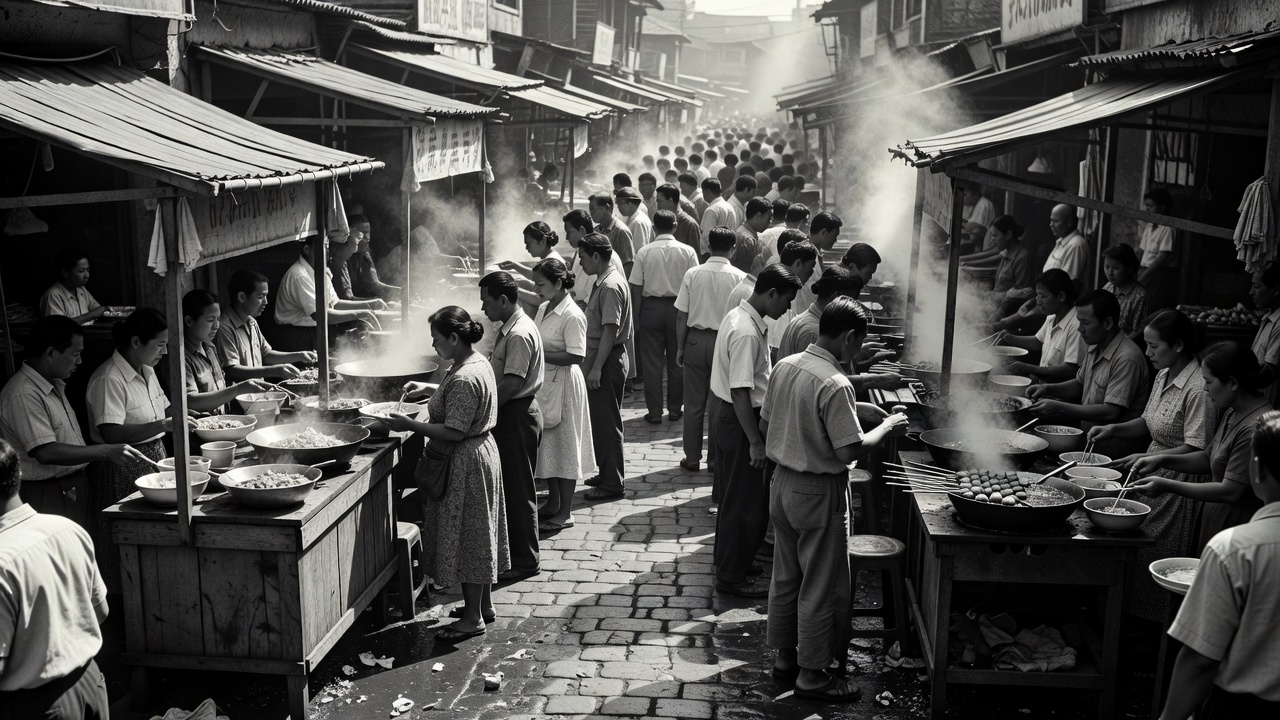
The tradition of consuming meals in the thoroughfares of Asia is not a modern convenience, but rather a deeply historical practice born out of strict urban planning, massive population density, and socio-economic necessity. To understand the modern Asian night market, one must trace the evolution of street-side commerce back to the imperial dynasties of China and the early urbanization of Japan and Southeast Asia.
The Tang and Song Dynasties: Breaking the Wards
During the Tang Dynasty (618–907 CE), Chinese capitals such as Chang'an were rigidly structured. Cities were divided into walled wards, and commerce was strictly confined to designated market areas that operated under tight curfews. The concept of unregulated "street food" as we know it today was effectively illegal, punishable by strict fines. However, as populations swelled, the logistical strain of feeding millions within restricted hours forced a shift.
By the Song Dynasty (960–1279 CE), the ward system collapsed. Markets spilled into the streets, and curfews were relaxed. Cities like Kaifeng and Hangzhou saw the emergence of night markets (yeshi). Historical texts from the period detail vendors selling candied fruits, stuffed buns, and various broths long into the night. This marked a profound structural change: dining became a public, communal activity rather than an exclusively domestic one.
The Yatai of Edo Period Japan
Parallel to the developments on the mainland, Japan experienced its own street food revolution during the Edo period (1603–1867). As the city of Edo (modern Tokyo) grew rapidly with an influx of samurai, merchants, and laborers, the demand for quick, affordable meals surged. This period gave rise to the yatai—mobile, wooden food carts equipped with roofs and basic seating.
These carts specialized in foods that were fast to prepare and consume: soba noodles, tempura, and early iterations of sushi. The structural design of the yatai was brilliant in its simplicity, offering both a kitchen and a dining room on wheels. While post-WWII regulations significantly curtailed the presence of yatai due to hygiene concerns, cities like Fukuoka still maintain this vibrant historical tradition.
Southeast Asia and the Rise of the Hawker Centre
In Southeast Asia, street food history is inextricably linked to 19th and 20th-century migration. As laborers from China, India, and the Malay Archipelago converged on colonial port cities like Singapore and Penang, they brought their culinary traditions with them. Early hawkers were itinerant, carrying kitchens on bamboo poles across their shoulders.
However, by the mid-20th century, rapid urbanization and concerns over sanitation led to major policy shifts. In Singapore, the government embarked on a massive relocation program in the 1960s and 70s, moving thousands of itinerant street vendors into purpose-built facilities known as hawker centres. This structural transition provided vendors with running water, electricity, and proper waste disposal, fundamentally altering the economics and hygiene of street food.
Comparing Early vs. Modern Vendor Structures
| Era / Style | Infrastructure | Mobility | Regulatory Environment |
|---|---|---|---|
| Tang Dynasty Markets | Fixed designated zones | Stationary | Strictly regulated, heavy curfews |
| Edo Period Yatai | Wooden carts with seating | Highly mobile | Lightly regulated until modern era |
| 19th C. Itinerant Hawkers | Bamboo carrying poles | Completely mobile | Unregulated, sanitation issues |
| Modern Hawker Centres | Plumbed, electrified stalls | Fixed | Highly regulated, standardized |
The Modern Legacy
Today, the Asian street food model is celebrated globally. In 2020, Singapore's hawker culture was inscribed on the UNESCO Representative List of the Intangible Cultural Heritage of Humanity, cementing the historical importance of these public dining spaces. The evolution from illicit, curfew-breaking night stalls in Kaifeng to highly organized modern hawker centres demonstrates a continuous balancing act between urban necessity, hygiene, and cultural preservation.