Nixtamalization and the Aztec Market
Exploring the pre-Columbian origins of Mesoamerican street food and the colonial forces that shaped modern regional cuisines.
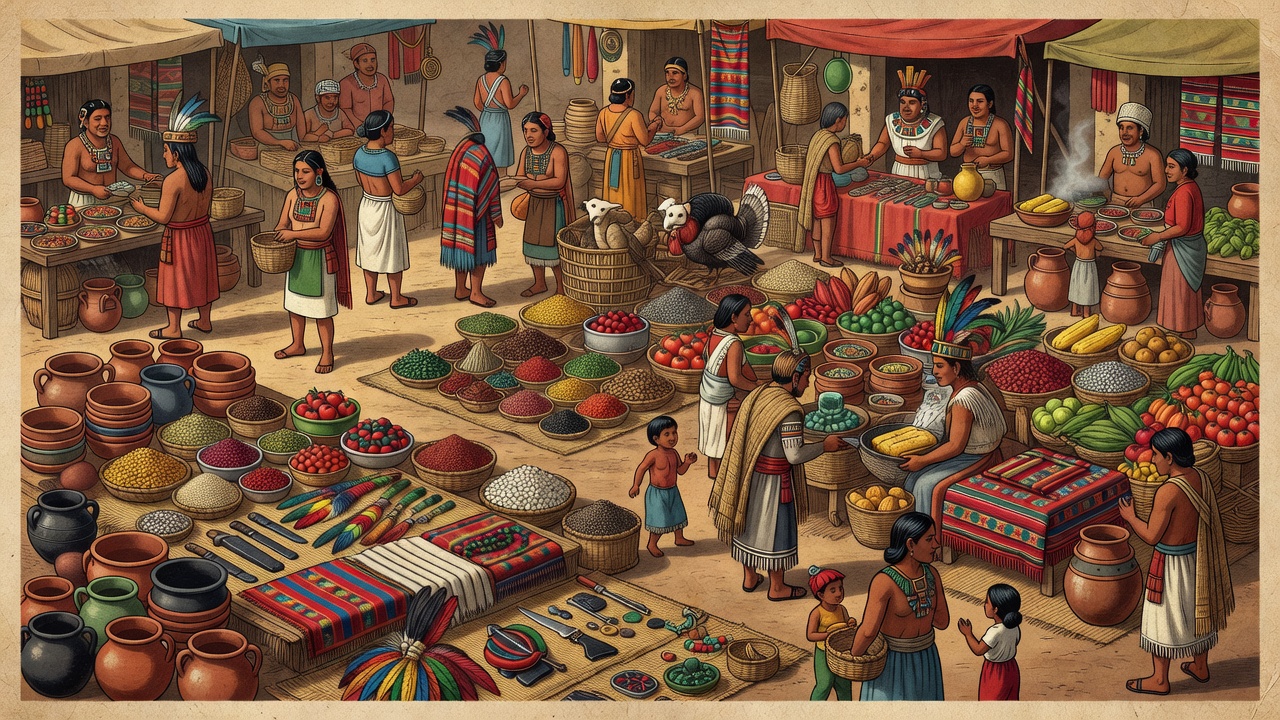
The foundations of Latin American street food extend back thousands of years before European contact. The urban centers of the Maya, Aztec, and Inca civilizations featured highly organized market systems where prepared foods were sold to urban dwellers. Understanding this history requires looking at the technological advancements of indigenous populations, specifically the processing of maize.
The Science of Nixtamalization
At the core of Mesoamerican street food is a process called nixtamalization, developed around 1500 BCE. Ancient peoples discovered that soaking and cooking dried maize kernels in an alkaline solution (typically water mixed with wood ash or slaked lime) removed the hull, improved the flavor, and crucially, made the niacin (Vitamin B3) nutritionally available. Without this chemical process, societies relying heavily on maize would suffer from pellagra.
This processed maize, known as hominy, was ground into masa (dough). Masa became the versatile foundation for a vast array of portable foods sold in ancient markets. The durability of masa allowed for the creation of foods that could be easily transported, traded, and consumed on the go—the very definition of street food.
Tenochtitlan: The Original Megacity Market
When Spanish conquistadors arrived at the Aztec capital of Tenochtitlan (modern-day Mexico City) in the early 16th century, they documented markets of staggering scale. Bernal Díaz del Castillo, a Spanish soldier, wrote extensively about the great market of Tlatelolco. Amidst traders selling gold, obsidian, and textiles, there were sections entirely dedicated to prepared foods.
Vendors sold early versions of tamales—masa stuffed with ingredients like turkey, frog, flamingo, or squash, wrapped in corn husks and steamed. Atolli, a warm masa-based beverage, was sold in clay vessels. The sheer volume of merchants required strict oversight; judges patrolled the markets to ensure fair pricing and standardized measures, representing an early form of municipal food regulation.
The Colonial Convergence
The Spanish conquest introduced new livestock (pigs, cows, chickens) and ingredients (wheat, garlic, onions, citrus) to the Americas. This resulted in a massive culinary collision. The introduction of lard fundamentally changed the texture of masa, making tamales softer and fluffier. The frying technique, previously uncommon in pre-Columbian Mesoamerica, was introduced, leading to the creation of foods like empanadas and churros.
In South America, specifically the Andean regions, indigenous groups had long consumed llama and alpaca meat. During the colonial era, enslaved Africans brought to Peru adapted these traditions, utilizing cheap cuts of beef heart discarded by the Spanish elites. Marinated in vinegar and spices and grilled on skewers over open fires, this became anticuchos, one of Peru's most enduring and historically significant street foods.
Ingredient Evolution
| Dish Concept | Pre-Columbian Ingredients | Post-Colonial Additions |
|---|---|---|
| Tamales | Masa, turkey, beans, squash | Pork lard, chicken, cheese |
| Empanadas (Concept) | N/A (Wheat not present) | Wheat flour, beef, olives, raisins |
| Anticuchos | Llama meat, native chilies | Beef heart, garlic, vinegar |
Modern Ramifications
The contemporary street food scene in Latin America is a direct continuation of these historical processes. The taco stands of Mexico City operate on the same principle of portable, masa-based nutrition that fueled the Aztecs. The street carts of Lima and Bogotá continue to serve dishes that map the complicated history of indigenous practices, colonial Spanish imports, and the influence of enslaved African populations. Studying these foodways offers a tangible, edible record of demographic shifts over the centuries.