Thermopolia to the Currywurst
Tracing the architectural and socio-economic shifts in European street food from antiquity to the post-war industrial age.
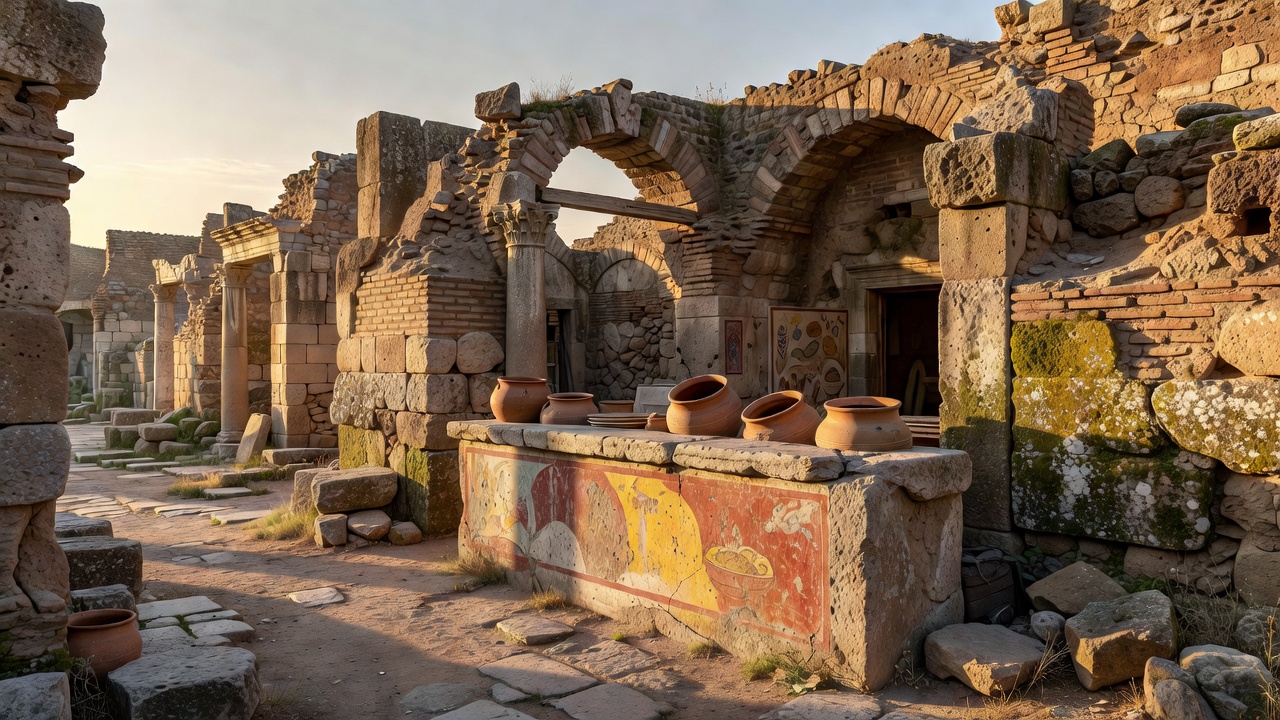
In Europe, the consumption of food outside the home was historically a marker of class. While modern restaurant culture is often associated with wealth and leisure, ancient and medieval street food was inherently the domain of the working classes—those who lacked the space, equipment, or fuel to cook in their own dwellings.
The Thermopolia of Ancient Rome
The clearest architectural evidence of ancient street food comes from the ruins of Pompeii and Herculaneum, preserved by the eruption of Mount Vesuvius in 79 CE. Archaeologists have uncovered over 150 thermopolia (literally "places where hot things are sold") in Pompeii alone. These establishments functioned as the ancient Roman equivalent of fast-food counters.
The structural design of a thermopolium was highly standardized. They featured L-shaped masonry counters facing the street. Sunk into these counters were large terracotta jars called dolia, which stored dried foods, nuts, and possibly hot stews. Wall frescoes depicted the goods sold—poultry, fish, cheese, and lentils. For the plebeians (commoners) living in crowded insulae (apartment blocks) without cooking facilities, the thermopolium was an absolute necessity for daily sustenance.
Medieval Cookshops and the Pie Sellers
During the Middle Ages, European cities expanded, and the dynamics of street commerce evolved. In London, the area along the River Thames became crowded with "cookshops." The 14th-century poet William Langland references the cries of street vendors in his famous work Piers Plowman, noting the calls of "Hot pies, hot!"
These medieval street foods were highly scrutinized. Because meat spoilage was a severe health risk before refrigeration, municipal guilds established strict regulations. Bakers who sold underweight bread or rotten meat in their pasties could be sentenced to the pillory. The architecture of street food in this era shifted from the fixed counters of Rome to a mix of stationary shops and itinerant hawkers carrying trays strapped to their necks.
Industrialization and the Modern Era
The Industrial Revolution reorganized European cities once again. Factory work imposed strict schedules on laborers, creating a desperate need for fast, calorie-dense foods near places of employment. This era saw the rise of fish and chips in Britain—a dish made possible by the expansion of the railway network, which could transport fresh fish from the coast to inland cities rapidly, and the mass production of cooking oil.
In the 20th century, the devastation of World War II necessitated new forms of cheap, accessible food. In 1949, in the ruins of divided Berlin, Herta Heuwer created the Currywurst. By mixing tomato paste with curry powder obtained from British soldiers, she poured it over a cheap pork sausage. It was sold from a simple street stand (an Imbiss) to construction workers rebuilding the city. The Currywurst became a symbol of post-war German reconstruction.
Historical Shifts in European Street Commerce
| Era | Primary Venue | Target Demographic | Key Driver |
|---|---|---|---|
| Ancient Rome | Thermopolium (Masonry Counters) | Plebeians without kitchens | Urban density, fire hazards |
| Medieval Era | Cookshops & Itinerant Hawkers | Guild workers, travelers | Proximity to trade routes, rivers |
| Industrial Revolution | Fried Fish Stalls | Factory laborers | Railway transport, factory schedules |
| Post-WWII | Imbiss Stands | Reconstruction workers | Resource scarcity, rationing |
Conclusion
The history of European street food demonstrates a continuous thread of pragmatic innovation. While upper-class dining traditions often focused on elaborate presentation and expensive imported ingredients, street-level cuisine was driven by technological advances—from masonry stoves to railways—and the immediate caloric needs of the urban workforce.